


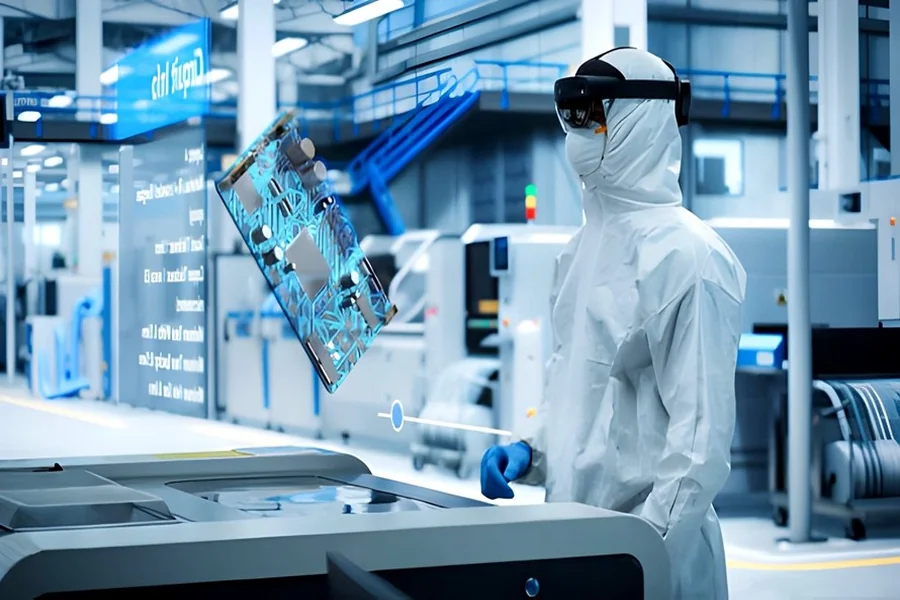
Low volume PCB assembly refers to producing and assembling printed circuit boards in small quantities, typically ranging from a few units to a few hundred pieces. This approach is essential for prototyping, product validation, engineering tests, and early-stage market launches. It allows manufacturers and designers to develop high-quality electronics without committing to the large order quantities required in mass production. Low volume PCB assembly creates an efficient bridge between conceptual design and full-scale manufacturing, ensuring that products can be tested, modified, and improved before reaching larger markets.
Why Low Volume PCB Assembly Is Becoming More Important
In the fast-evolving electronics industry, speed, flexibility, and precision have become crucial. Low volume PCB assembly supports these priorities by offering accelerated production timelines and the ability to adapt quickly to design changes. Engineers can refine circuitry, adjust layouts, or enhance performance without risking large financial investments. This adaptability makes low volume assembly especially valuable for start-ups, R&D teams, and companies exploring new product variations in consumer electronics, automotive electronics, industrial equipment, medical devices, telecommunications modules, and IoT systems.
Supporting Innovation Through Small-Batch Manufacturing
Many innovative ideas begin at the prototype stage, where small production quantities are more practical and cost-effective. Low volume PCB assembly ensures that designers can test real-world functionality before scaling. When issues are identified, modifications can be made effortlessly, preventing costly mistakes in mass production. This iterative approach accelerates product innovation while maintaining strong control over quality.
The Low Volume PCB Assembly Process
The process of low volume PCB assembly is similar to mass production but focuses heavily on customization and close quality monitoring. It typically begins with design file verification, where the assembler checks for manufacturability and identifies potential issues. Once approved, bare PCBs are fabricated using materials and stack-ups that align with the design’s electrical and mechanical requirements. Component sourcing follows, which can include specialized or hard-to-find parts required for prototypes or custom devices.
During assembly, SMT lines mount components onto the board using precise automation. For mixed-technology designs, through-hole components are added using selective soldering. The boards then undergo reflow soldering or wave soldering, depending on the assembly type. Testing and inspection form a core part of low volume PCB assembly, with AOI, X-ray inspection, and functional testing ensuring that each board meets performance expectations. Because quantities are small, assemblers often allocate more hands-on attention, resulting in higher reliability and fewer production defects.
Efficient Handling of Component Variations
Small batch production often requires unique or specialized components. A major advantage of low volume PCB assembly is that manufacturers can adapt sourcing strategies based on immediate needs rather than long-term bulk supply chain commitments. This flexibility ensures designers can evaluate different components, validate compatibility, and upgrade features without delays.
Applications of Low Volume PCB Assembly
Low volume PCB assembly plays a key role across multiple industries that rely on precision, rapid development, and tailored performance. Startups developing electronics rely on low volume runs to test and validate early-stage ideas cost-effectively. Medical device manufacturers use low volume PCB assembly for prototypes of sensors, diagnostic devices, and monitoring equipment, where accuracy and reliability are mandatory.
Automotive companies require small batches to evaluate control modules, sensors, and lighting systems before implementing them in full production. Industrial electronics manufacturers depend on low volume PCBs for machinery testing, automation systems, and custom control solutions. Telecommunications devices, including routers, RF modules, and network systems, often require multiple revisions before mass production, making low volume assembly essential for testing variations. Consumer electronics companies use small-run assembly for early device samples, beta units, and pilot batches that help verify performance and collect user feedback.
A Vital Stage Between Concept and Mass Market
Low volume PCB assembly functions as the critical stage where a concept turns into a usable prototype and eventually a market-ready product. It helps manufacturers validate thermal performance, electrical stability, mechanical fit, and overall product functionality, significantly reducing risks before committing to high-volume production.
Advantages of Low Volume PCB Assembly
One of the primary advantages of low volume PCB assembly is minimized financial risk. Companies can develop and refine designs without investing in thousands of units upfront. Another significant benefit is faster turnaround times, as small batches can often be produced more quickly than high-volume orders. Flexibility is another key advantage, as small-run projects make it easy to incorporate design updates or introduce new features.
Low volume assembly also offers better customization options. Because each batch is handled with more attention, manufacturers can tailor processes such as specialized coating, unique component selections, or advanced testing methods. Quality assurance is typically stronger because technicians and engineers can closely monitor each board, ensuring that every detail meets the required specifications.
Enhancing Time-to-Market with Precision and Speed
Low volume PCB assembly enables faster product launches. Companies can create a series of prototypes, test them, adjust them, and move toward final versions within short cycles. This rapid iteration significantly boosts competitiveness in industries where time-to-market is critical.
Final Thoughts
Low volume PCB assembly is essential for modern electronics development, offering the perfect balance of flexibility, customization, and cost control. It empowers engineers, innovators, and manufacturers to validate ideas, refine performance, and ensure quality before scaling to higher production quantities. With its ability to support fast prototyping, material experimentation, and small-batch customization, low volume assembly has become a core component of efficient and reliable product development. For businesses seeking dependable partners to handle such precise and detailed manufacturing, working with experienced Chinese PCBA providers is an excellent way to ensure consistent results, high-quality production, and smooth transition from prototype to large-scale manufacturing.
